


Dental implants
Jaw surgery
Lower jaw
Upper jaw
Widening of the jaws
The chin
Jaw angle
Cheek bones
Orthognathic classification
Aesthetic facial surgery
Snoring and sleep apnea
Jaw surgery - Jaw angle
This is the angle formed by the junction of the posterior and lower borders of the lower jaw.
Jaw angle reduction or reduction gonioplasty
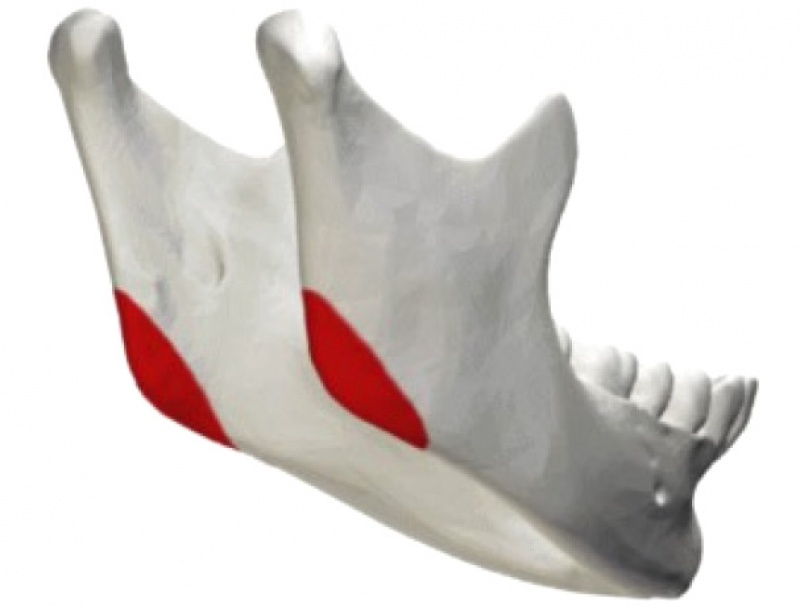 The shape of the lower jaw angles has an essential influence on the appearance of one’s face. The more prominent or square the jaw angles are, the more they enhance masculine features. When the jaw angles are too prominent, however, the jaw can be disproportionately wide as compared to the rest of the face. This may create a square-shaped face and is the motivation for aesthetic jaw angle modification surgery, also known as a gonioplasty. A decortication of the area is sometimes performed as well. Then some outer layer of the jawbone is shaved away. Sometimes, we remove the inner part of the masseter muscle or we use Botox injections (50 i.e.) to enhance the involution of the muscle in conjunction with the bone removal.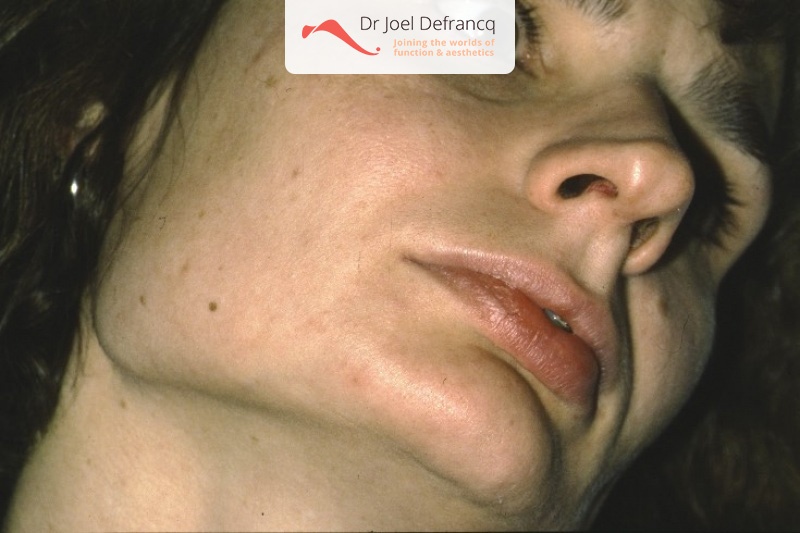
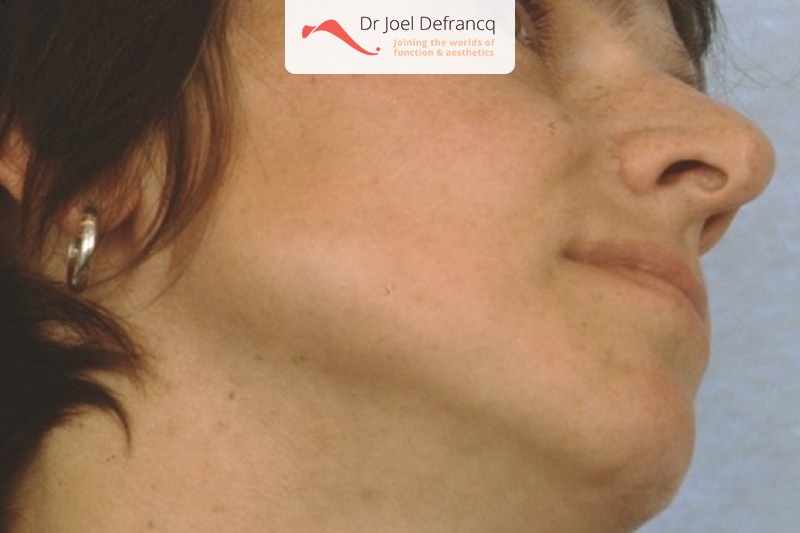
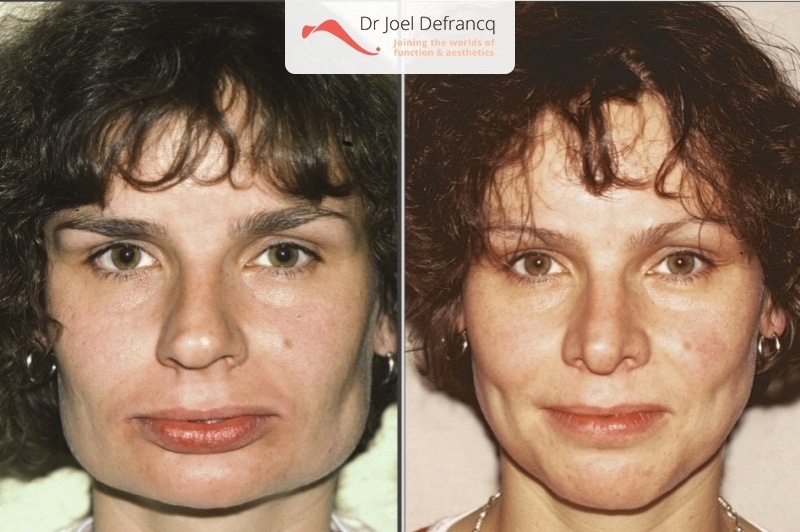
Jaw angle built up
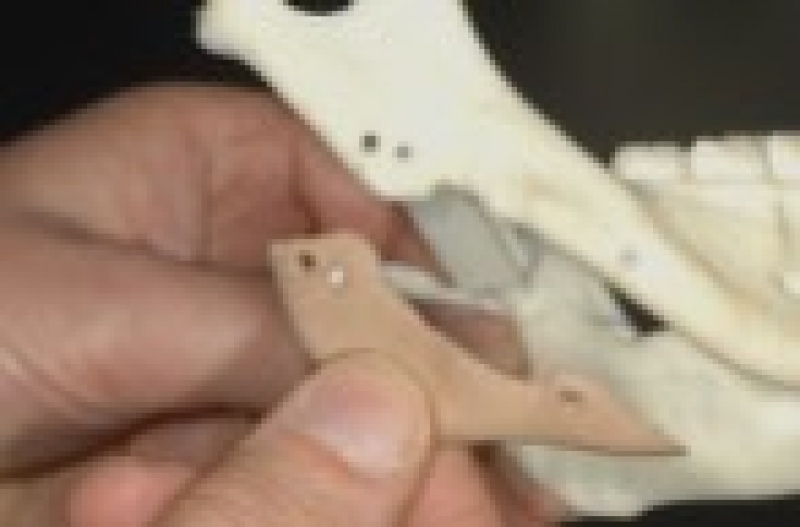
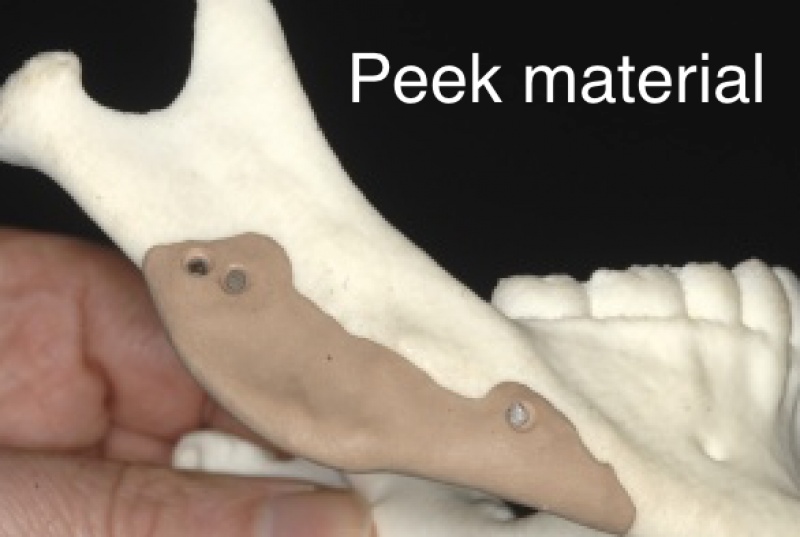
The preparatory phase for those patients is extensive. Indications are mostly infection and trauma, and Dr Defrancq regards 3D rendering and stereolytographic models as essential. We start to build the gonial angle in wax directly on a stereolytographic model (plastic copy of your own jaw) rendered in 3D rendered. The final material is then PEEP or orthopaedic resin (palacos).
On the plastic replica of the jaw (stereolythographic model) the gonial angle is created first in yellow beeswax by the surgeon (1). This is then turned into resin (2) in the laboratory. A negative of those gonial angles is then made in jelly silicone and sterilised (3). During surgery, those steryle silicone housings are injected with regular orthopaedic resin (4).


Postoperative instructions & frequently asked questions
Is silicone a reasonable alternative?
Silicone implants are rather soft and the difficulty here is the proper fixation in the proper location and keeping the implant there over time. This makes this kind of implant more unpredictable.
Are there possible aesthetic complications?
Muscle disruption is possible if the muscle sling around the inferior border of the mandible (the pterygo-masseteric sling) gets breached and rides up since there is no longer adherence to the bone. The muscle can then form a ball above the implant when the patient chews.
When is orthopaedic resin indicated and when is a Peek (poly-ethylene-ethylene-ketone) implant indicated?
It is a matter of cost, complexity, and surgeon preference. Orthopaedic resin is more artisanal and work-intensive for the surgeon, but finally works out at half the price of the Peek. The Peek implant is made in a factory and is guided totally by computer. For a surgeon it is easier to be guided by a stereolytographic model, since it is a plastic copy of your own jaw with the same touch and feel, and to use this as a direct work model. Peek is about computers and 3D rendering, and images going backwards and forwards to the company until the baby is delivered.